


Certification Made Green in Italy
Fonderia Lead Time S.p.A.
| Declaration published on | 09/19/2025 |
| Valid until | 09/18/2018 |
| DIAP access link | Annex C.2 – B) DIAP Foundry Lead Time |
| Entity that verified the Study: | Bureau Veritas Italia spa |
| Access link to third-party verification certificate | ANNEX C3 MGI Lead Tine Spa Certificate |
Information about the company
The Fonderia Lead Time S.p.A. produces jets for the agricultural sector, earthmoving machinery, wind power production and the mechanical sector. It is equipped with modern and technologically updated systems and control equipment adapted to the increasingly demanding market in terms of product quality and reliability. The foundry has over 90 years of history in the Italian production system, numbers that characterise a company that produces with balance and concreteness products of excellence in the national and international smelter market.
The foundry has:
- – Nr. 3 “Cime” 54 Ton crucible induction electric ovens with IGBT technology
- – Nr. 2 electric crucible induction ovens “Cime” of 28 tons with IGBT technology
- – Nr. 1 8 Ton “Cap” pressure casting furnace for the moulding line.
The Lead Time Foundry has the plant located in via Zona Industriale Molino, 62020 Caldarola (MC). In this DIAP, cast iron castings produced at the Caldarola plant are considered.
Premise on climate change and ecological transition
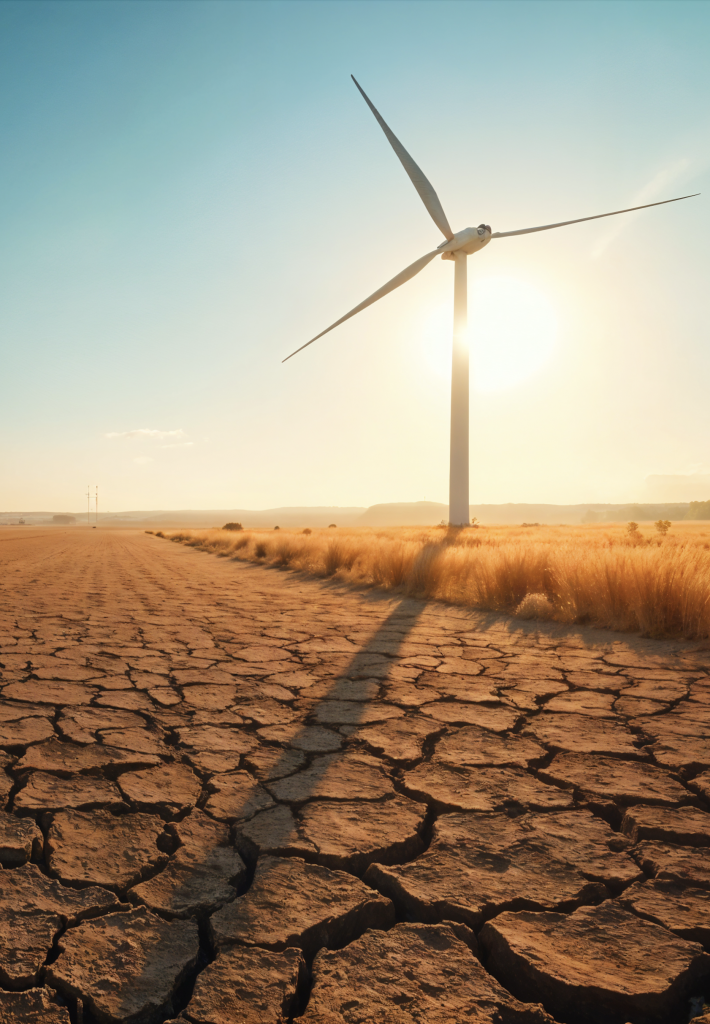
The phenomenon of climate change is becoming increasingly evident and requires a profound change in the use of resources, which must be focussed on processes of efficiency, increase in energy from renewable sources and circularity in production processes. These issues have fully entered the agenda of all governments, in particular those of Europe, which have found in the Green Deal a central element of a strategy aimed at making Europe the first continent in the world to achieve carbon neutrality.
To this end, the European Union (EU) has defined a methodology for calculating the environmental impact of various types of products. This methodology is called PEF (Product Environmental Footprint) and is based on product life cycle analysis (LCA). The objective of the Union is to create a single market for all products that have “green” characteristics, whose manufacturing companies want to seize the opportunity to declare their approach to sustainability in a precise, transparent and measurable way.
The recent legislation on “Made Green in Italy” has transposed this new orientation legislatively. This legislation is contained in art. 21 of the new law 221/2015 concerning the Environmental Link to the 2015 Stability Law and foreshadows a completely new development for high-quality national products. This legislation recently published the MATTM Implementing Decree, D. n. 56 of March 21, 2018 and published in OJ on May 29, 2018.
The Made Green in Italy brand is based on the application of the PEF – Product Environmental Footprint methodology, defined by the European Commission in Recommendation 2013/179 and subsequently with EU Recommendation 2021/2279, as the foundation for policies in favour of improving resource efficiency, the environmental impact of products and their life cycles. The implementation of this methodology makes it possible to introduce a precise orientation in company production, which is to associate quality production with the environmental and sustainability message seen not only as tools for enhancing the territory and the environment but also as a tool for differentiation on the market and the development of the circular economy.
The adoption of this scheme has the following objectives:
-
Promote sustainable production and consumption models;
-
Contribute to the implementation of EU environmental strategies;
-
Stimulate the continuous improvement of products and the reduction of the negative impacts they have in the various phases of their life cycle;
-
Favour informed, conscious and sustainable consumption choices;
-
Ensure the transparency and comparability of the environmental performance of products;
-
Strengthen the image of “Made in Italy” products to promote their competitiveness;
-
Define an effective method of communication
Fonderia Lead Time S.p.A. wants to take a further step forward in demonstrating its sustainability path towards carbon neutrality, in accordance with a strategy it has been pursuing for several years.
It is noted that with this certification, the Lead Time Foundry certifies not only its environmental footprint but also regulatory compliance with all the environmental authorisations required by the Public Bodies in charge, such as the AIA, which have been checked by the Certification Body.
Product information
This Declaration of Environmental Footprint concerns the cast iron castings produced at the plant in via Zona Industriale, 62020 Molino (MC).
The product object of this study corresponds to the code of the Classification of Products by Activity (CPA): C24.51. Cast iron castings.
Conventionally, cast iron is defined as a Ferro-Carbon alloy where iron is the predominant element and where carbon is present at a content greater than 2%. When the carbon content is less than 2%, it is in the field of steels[1]. From the point of view of the intended use, cast iron castings can have a large number of end uses.
The following destinations are listed as possible end uses of cast iron castings:
-
Savaries components for the Agricultural, Earthmoving and Automotive Sectors;
-
Industrial valves – Cast iron globe valves;
-
Spheroidal graphite cast iron pipes;
-
Ductile iron pipes – Polyethylene sleeve for construction site application;
-
Pipes, fittings and fittings in spherical iron;
-
Crowning and closing devices for road wells;
-
Pressure containers not exposed to flame.
Cast iron castings are also produced according to the drawing and technical specifications of the clients of the main manufacturing sectors (automotive, mechanical, tractor, electrical, etc.), in various structures and chemical compositions below:
-
Slaminated graphite cast iron castings;
-
Spheroidal graphite cast iron castings;
In the case of cast iron castings, the type of products made, unlike steel products, is not standardised as the castings are at least 70% produced according to the design and specification of the client and, therefore, also differ within the same “family” of products (for example, in the case of the automotive sector, the same component differs in relation to the client car manufacturer). Cast iron castings are characterised, therefore, not by their destination as a product but by their chemical composition and the unit of measurement is the ton, as it is an intermediate product.
[1] For some chrome steel castings, it is possible to have a carbon content slightly higher than 2%, generally oscillating between 2.06% and 2.11%.
Declaration information
This “Product Environmental Footprint Statement – “Cast iron fusion”” refers to the study “Product Environmental Footprint of the cast iron product of the Lead Time Foundry, Molino plant – Ver n.01 of 20/06/2022”.
The document has been independently verified by Bureau Veritas.
Environmental statements related to different schemes are not comparable.
For the conduct of the study and this declaration, reference was made to the following rules and recommendations:
-
ISO 14040:2021 Environmental management – Life cycle assessment – Principles and framework
-
ISO 14044:2021 Environmental management – Life cycle assessment – Requirements and guidelines
-
Recommendation 2021/2279/EU Commission Recommendation on the use of common methodologies to measure and communicate the environmental performance during the life cycle of products and organisations.
-
Product Category Rules (SPC) on Cast Iron Castings (NACE 24.51) version 1.0 of May 2022;
-
Regulation for the implementation of the voluntary national scheme for the evaluation and communication of the environmental footprint of products, called “Made Green in Italy”, referred to in Article 21, paragraph 1, of Law 28 December 2015, n. 221.
Summary of the Environmental Footprint Study
The objective of this study is to carry out an analysis of the environmental impacts for the cast iron casting product of the Guido Glisenti Foundry, in accordance with the Product Category Rules for cast iron castings, published on the website of the Ministry of Ecological Transition as part of the Made Green in Italy scheme.
The functional unit considered for this study is:
-
1 net ton of crude jet (at the foundry exit gate).
As for the key aspects of the functional unit, these are defined below:
Table 1: Key aspects of the functional unit
| What? | Cast iron castings |
| How much? | 1 net ton of raw jet (at the foundry exit gate) |
| How good? | The gross jet ton is an intermediate product that can be used for a wide variety of applications. For the ton of raw jet as an intermediate product to be used in final applications, the “How good” depends heavily on the downstream application and its specific requirements cannot be generalised. The “how good” is specified by the product standard. |
| For how much? | The intermediate product characteristic makes it impossible to define a priori a duration, which is strongly dependent on the final use that is made of it. |
The reference flow is the amount of product needed to fulfil the defined function and is measured in tons. All quantitative input and output data collected in the study are calculated in relation to this reference flow, which corresponds to the net ton of raw jet coming out at the company’s gate. It is emphasised that in order to obtain a functional unit of product for its use, the losses of raw material from the production phase (yin delivery of the foundry process) are included in the production calculation.
The product under study was built considering an average recipe of the types of cast iron produced over a year representative of the company’s production. The Lead Time Foundry uses only electric induction furnaces and the green moulding system for production.
The table below summarises the main production characteristics of the product under study.
Table 2: Definition of the product under study
| Doe iron | Forming technique | Fusing technique | ||
| Forming | % Production | Furn | % Production | |
| Green | 100% | Electric | 100% | |
There were no methodological deviations on the impact categories used, compared to when required by the PEF. Other methodological limitations are:
- the data sets used are not datasets compliant with the Environmental Footprint (EF) method, as these datasets are only available for PEF/OEF studies carried out according to the PEFCRs published on the website http://ec.europa.eu/environment/eussd/smgp/PEFCR_OEFSR.htm.
Some processes have been excluded from modelling, as reported in the reference CPR:
- the packaging for the supply of raw materials and auxiliary materials, as most of these arrive in bulk on trucks without packaging; the share of raw materials and auxiliary materials with packaging is minimal and therefore has a marginal impact;
- theinfrastructure and the productive plants of the company, as, considering the amortisation, the impact on an annual basis is marginal.
For the product under study, the data quality is very good.
The following are the results of the study characterised.
Table 3: Impact results characterised for the raw cast iron product
| Impact category | Unit of measurement | Rough cast iron casting |
| Climate change | kg CO2 eq | 2.02E+03 |
| Ozone depletion | kg CFC11 eq | 1.82E-04 |
| Ionising radiation | kBq U-235 eq | 1.72E+02 |
| Photochemical ozone formation | kg NMVOC eq | 6,60E+00 |
| Particulate matter | disease inc. | 3.54E-04 |
| Human toxicity, non-cancer | CTUh | 2,35E-05 |
| Human toxicity, cancer | CTUh | 4,12E-06 |
| Acidification | mol H+ eq | 8.22E+00 |
| Eutrophication, freshwater | kg P eq | 6,88E-01 |
| Eutrophication, marine | kg N eq | 1.71E+00 |
| Eutrophication, terrestrial | mol N eq | 1.75E+01 |
| Ecotoxicity, freshwater | CTUe | 4,40E+04 |
| Land use | Pt | 5,61E+03 |
| Water use | m3 depriv. | 5,00E+02 |
| Resource use, fossils | MJ | 2,83E+04 |
| Resource use, minerals and metals | kg Sb eq | 1.35E-02 |
| Climate change – Fossil | kg CO2 eq | 2.01E+03 |
| Climate change – Biogenic | kg CO2 eq | 3,39E+00 |
| Climate change – Land use and LU change | kg CO2 eq | 6.23E-01 |
The figure below shows the impacts by phase of the life cycle for the product under study.
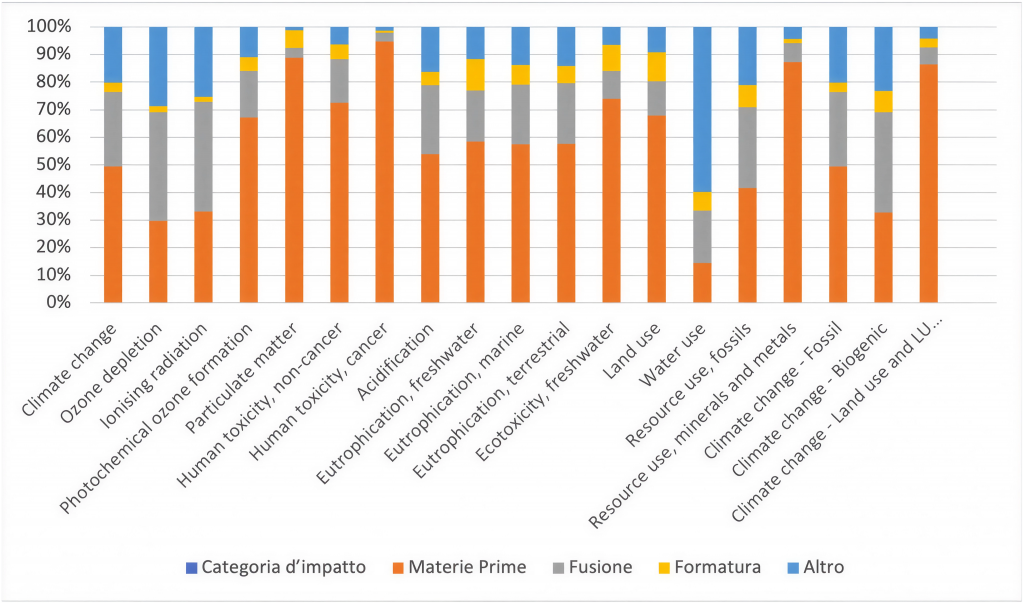
Figure 1: Life cycle impacts for 1 ton of raw cast iron casting
The most relevant impact categories found in this study are, in order of relevance:
- Ionising radiation
- Particulate matter;
- Climate change;
- Resource use, fossils;
- Ecotoxicity, freshwater;
- Resource use, minerals and metals.
The most relevant processes for Cast Iron Castings are represented by:
Table 4: Most significant processes for relevant impact categories
| Category most relevant impact | Processes relevant |
| Climate change | · RAW MATERIALS – Virgin cast iron
· PRODUCTION – Fusion electricity · RAW MATERIALS – Ferroalloys |
| Particulate matter | · RAW MATERIALS – Mouthpiece
· RAW MATERIALS – Virgin cast iron · RAW MATERIALS – Other Raw Materials · RAW MATERIALS – Ferroalloys · PRODUCTION – Electricity in the fusion phase · PRODUCTION – Fusion – waste · PRODUCTION – Electricity in other phases |
| Ionising radiation | · RAW MATERIALS – Mouthpiece
· RAW MATERIALS – Virgin cast iron · RAW MATERIALS – Other Raw Materials · RAW MATERIALS – Ferroalloys · PRODUCTION – Electricity in the fusion phase · PRODUCTION – Electricity in other phases |
| Ecotoxicity, freshwater | · RAW MATERIALS – Virgin cast iron
· PRODUCTION – Raw materials in the moulding phase · PRODUCTION – Electricity in the fusion phase · RAW MATERIALS – Boccame · RAW MATERIALS – Ferroalloys |
| Resource use, fossils | · RAW MATERIALS – Other metals
· RAW MATERIALS – Virgin cast iron |
| Resource use, minerals and metals | · PRODUCTION – Electricity in the process of fusion
· PRODUCTION – Electricity in other phases · PRODUCTION – Methane gas in other phases · RAW MATERIALS – Other metals · RAW MATERIALS – Boccame · RAW MATERIALS – Virgin cast iron |
The sum of the weighted score of the three impact categories indicated in the reference RCP is equivalent to 122.17 mPt, which classifies the foundry Lead Time spheroidal cast iron product in class A.
Comparison with the benchmark
The expected performance classes are three, A, B and C and are defined from the benchmark value, calculated for the representative product raw cast iron castings, and from the upper and lower thresholds.
In particular, products whose impact calculated as a single value (sum of the weighted results of the three most relevant impact categories) is greater than the upper threshold value, must be classified in class C.
Products whose impact calculated as a single value (sum of the weighted results of the three most relevant impact categories) is lower than the lower threshold value, must be classified in class A.
Products whose impact calculated as a single value (sum of the weighted results of the three most relevant impact categories) is between the upper and lower threshold value, must be classified in class B.
The following are the benchmark values and the definition of environmental performance classes.
Table 7: Benchmark as a single value
| Representative product | Units of measurement | Benchmark |
| PR – Cast Iron Castings | mPt | 163.92 |
Table 8 Environmental performance classes
| Class | Coarse cast iron castings | Unit of measurement |
| Class A | PP < 141.44 | mPt |
| Class B | 141.44 < PP < 193.03 | mPt |
| Class C | PP ≥ 193.03 | mPt |
For the product studied, the sum of the weighted results of the three most relevant impact categories, defined in the RCP of the raw cast iron jets for the representative product, was therefore calculated.
Table 9: Calculation of environmental performance class for cast iron casting
| Impact category | Craw cast iron castings | UdM |
| Climate change | 52.81 | mPt |
| Particulate | 53.35 | mPt |
| Consumption of resources, minerals and metals | 16.01 | mPt |
| Total | 122.17 | mPt |
The single score calculated for the raw cast iron jet is equal to 122.17 mPt, lower than the threshold value 141.44 mPt; therefore, the product studied results in class A.
These results were possible thanks to a strategy of efficiency in the use of resources that the foundry has been pursuing for several years.
Additional environmental information
Following the indications in the CPR, the percentage of recycled material used in the oven charge recipe is made explicit, distinguishing between mouthpieces (material from internal recycling of the casting and jet feeding systems) and scrap of external origin purchased (End of Waste scrap, by-product scrap). The percentage of mouth-watering used in the recipe is 21.21%, while that of purchased scrap is 49.18%.